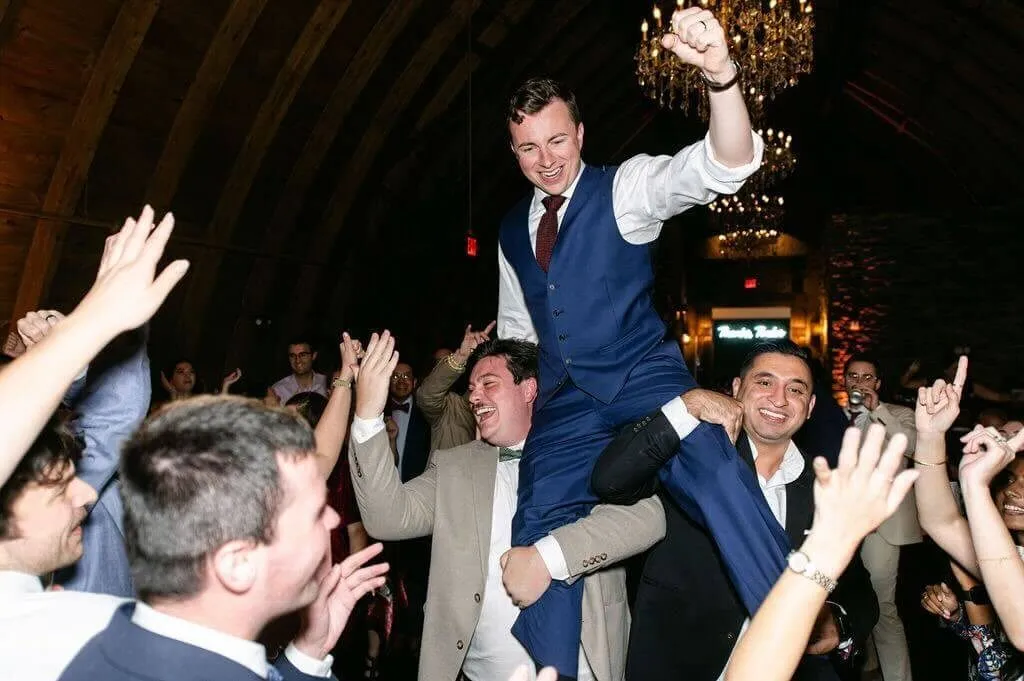
The DMV is one of the most culturally layered wedding markets in the country. On any given Saturday we might be working a wedding that blends Nigerian and Filipino families, an Indian and Persian ceremony with an American reception, or a Salvadoran and Ethiopian couple honoring both households in one night. The music is where all of that comes together, and it is also where things go wrong fastest if nobody planned ahead.
Start With the Families, Not the Genres
Couples often approach this by naming genres: “we want some Bollywood, some hip-hop, some Amapiano.” That is a fine starting point, but the more useful exercise is mapping it to people. Who is in the room? Grandparents who will only get up for a specific style of music? Cousins flying in from another country who expect certain songs as a matter of respect? A parent who will be visibly hurt if their country’s music never gets played?
We ask couples to think in terms of “must-honor” moments versus “nice-to-have” songs. A must-honor moment might be a specific entrance song for a cultural ceremony segment, a father-daughter dance to a song in a native language, or a set specifically for the family origin country played during a natural lull like cocktail hour. Nice-to-have is everything else, and that is where the DJ has room to read the floor.
Sequencing Matters More Than the List Itself
A common mistake is treating a multicultural playlist as several separate playlists stapled together, twenty minutes of one culture’s music, then an abrupt hard cut to another. Guests notice the seams, and the energy resets to zero every time.
Better sequencing usually looks like:
- Cocktail hour and dinner are the natural home for music that is meaningful but not necessarily danceable, traditional instrumentals, classic songs from each family’s background, or acoustic versions that let people talk while still feeling honored.
- Early dancing blends in genres that most of the room can move to even if they do not know the specific song, Afrobeats, reggaeton, and mainstream pop share enough rhythmic DNA that they transition well into each other.
- Peak dancing, an hour or two in, is when we bring in higher-commitment cultural music, a Bollywood set, a bachata block, a specific regional Mexican or Middle Eastern set, because by then the room is warm and willing to follow the DJ’s lead even into music some guests do not know.
- Late night is often where the most personal, specific requests land well, because the crowd remaining is usually the couple’s closest friends and family who came ready for exactly that music.
Building in Transition Songs
The songs that make multicultural sets work are the bridge tracks, the Afrobeats-pop crossovers, the bachata remixes of English-language hits, the Bollywood tracks with a hip-hop influence. A good DJ keeps a mental (or literal) list of these bridges and uses them to move from one cultural block to another without stopping the momentum. This is a skill built from doing hundreds of these weddings, not something you can fully script on a spreadsheet in advance.
Handling Instruments, Live Elements and Special Segments
Many multicultural ceremonies and receptions include live elements, a dhol player, a mariachi trio, a live drummer for a specific procession, a cultural dance troupe. Our job is to build the sound and timeline around those elements, not compete with them. That means:
- Confirming exactly how long the live segment runs and what happens immediately before and after it musically.
- Making sure our sound system and the live performers are not fighting for the same frequencies or the same moment of guest attention.
- Having a clear cue system, usually visual, between the DJ, the band or performer, and the planner so nobody starts too early or leaves dead air.
Two-Ceremony and Two-Reception Weddings
Some of the most complex jobs we book are weddings with two distinct ceremonies, a traditional Hindu ceremony in the morning followed by a Western-style reception that evening, or a Chinese tea ceremony followed by a banquet-style dinner reception. In these cases the music plan is really two plans stitched together with a shared thread. We treat the transition between the two events as its own moment worth designing, sometimes a short instrumental set as guests move rooms or change locations, sometimes a live performer bridging the gap so there is no dead air between the formal cultural portion and the more familiar reception format most Western guests expect.
For these double-format days, timing communication with the venue and any outside vendors, caterers, videographers, ceremony officiants, matters even more than usual, since a delay in one segment cascades into every musical cue that follows.
Working With Officiants, Aunties and Family Coordinators
On many multicultural wedding days, there is an unofficial family point person, often an aunt, uncle or family friend who knows exactly which songs matter and which older relatives need specific handling. We actively look for that person during setup and treat them as a resource, not an interruption. They often know things no planning document captures, that a grandmother needs to hear a specific hymn before she will relax for the night, or that a certain cousin should not be given the microphone under any circumstances. Building a quick rapport with this person in the first twenty minutes of an event has saved more receptions than any spreadsheet we have ever built.
Language, Pronunciation and Respect
Getting names, song titles and announcements right in a language you do not speak natively takes real preparation, not a five-minute glance at a note card. We ask couples to record a voice memo of tricky pronunciations, whether it is a grandparent’s name, a regional dialect word, or the title of a traditional song, so the DJ can practice before the event rather than guessing live on a microphone in front of two hundred people. Small as it sounds, mispronouncing a grandmother’s name during an introduction is one of the fastest ways to sour an otherwise perfect night, and it is entirely avoidable with fifteen minutes of preparation.
What to Send Us in Advance
The planning documents that help most are simple:
- A short list of “absolutely must play” songs by moment, with the reason behind each one if it is not obvious.
- A short list of “absolutely do not play” songs or artists, which matters as much as the must-play list.
- Names of key family members and what they should hear when they are introduced or asked to dance.
- Language notes, if you want us to make a bilingual or trilingual announcement, tell us in advance so we get pronunciation right.
Trusting the Read of the Room
Even with a great plan, some of the best moments come from real-time reads. We have watched a table of grandparents ignore three planned songs and then rush the floor the moment an unplanned classic comes on. A good DJ treats the plan as the skeleton and stays flexible on the muscle around it, watching who is standing, who is dancing, and who just checked their phone.
Common Pitfalls We Help Couples Avoid
- Overloading the early reception with too many “important” songs back to back, which exhausts guests before the real dancing starts.
- Assuming one culture’s music will clear the floor for another, when in practice a well-chosen bridge track keeps everyone moving.
- Forgetting to account for older relatives who may want to hear something meaningful but are not going to dance to a club remix.
- Under-communicating pronunciation, song titles in another language, or which version of a song (there are often multiple edits or remixes of the same title).
- Assigning too much music to one culture out of convenience because the couple is more familiar with it, leaving the other family feeling like an afterthought.
- Waiting until the week of the wedding to source specific regional tracks that are harder to find on mainstream streaming platforms and need to be located in advance.
A Note on DMV Venues and Sound Considerations
Many of the region’s most popular multicultural wedding venues, banquet halls in Rockville and Falls Church with large South Asian and Persian wedding business, event spaces in Prince George’s County that regularly host West African and Caribbean celebrations, and hotel ballrooms across Tysons and Fairfax that book back-to-back cultural weddings most weekends, have house sound systems and layouts that differ meaningfully from a typical American wedding venue, sometimes with a raised stage for cultural performances, a separate area for a live dhol or brass section, or a floor plan built around a center aisle for a baraat. Walking the room in advance with these specific cultural elements in mind, rather than treating it like a generic ballroom, changes how we place speakers, monitors and the DJ booth itself.
A multicultural wedding does not need to feel like two separate parties glued together. With the right planning conversation and a DJ who has actually worked weddings like yours before, it becomes one continuous night that happens to honor more than one story.
If you are planning a wedding that blends cultures, traditions or languages, Solender Events would be glad to talk through your music plan and help you build a night that feels like both families equally.