Every family planning a bar or bat mitzvah eventually asks some version of the same question: where is the money actually supposed to go? There’s no single right answer, because budgets in the DMV range widely depending on guest count, venue type and how much of the day is DIY versus fully produced. But there is a general shape to how spending typically breaks down, and understanding it early helps families avoid the common trap of over-allocating to one category and running short somewhere that matters more to them.
The Big Three: Venue, Catering, Entertainment
For most families, three categories consume the large majority of the budget:
Venue rental. This varies enormously, a synagogue social hall, a hotel ballroom in Bethesda or Tysons, a country club, or a standalone event space in DC or Baltimore all come with very different rental structures, some bundling catering and some not. Venue cost is usually the first number that anchors the rest of the budget, which is exactly why locking the venue early in your planning matters.
Catering. Often priced per person, catering swings based on guest count, meal style (plated versus buffet versus stations) and bar package. For many families this ends up being the single largest line item, especially at higher guest counts, since it scales directly with the number of people you invite.
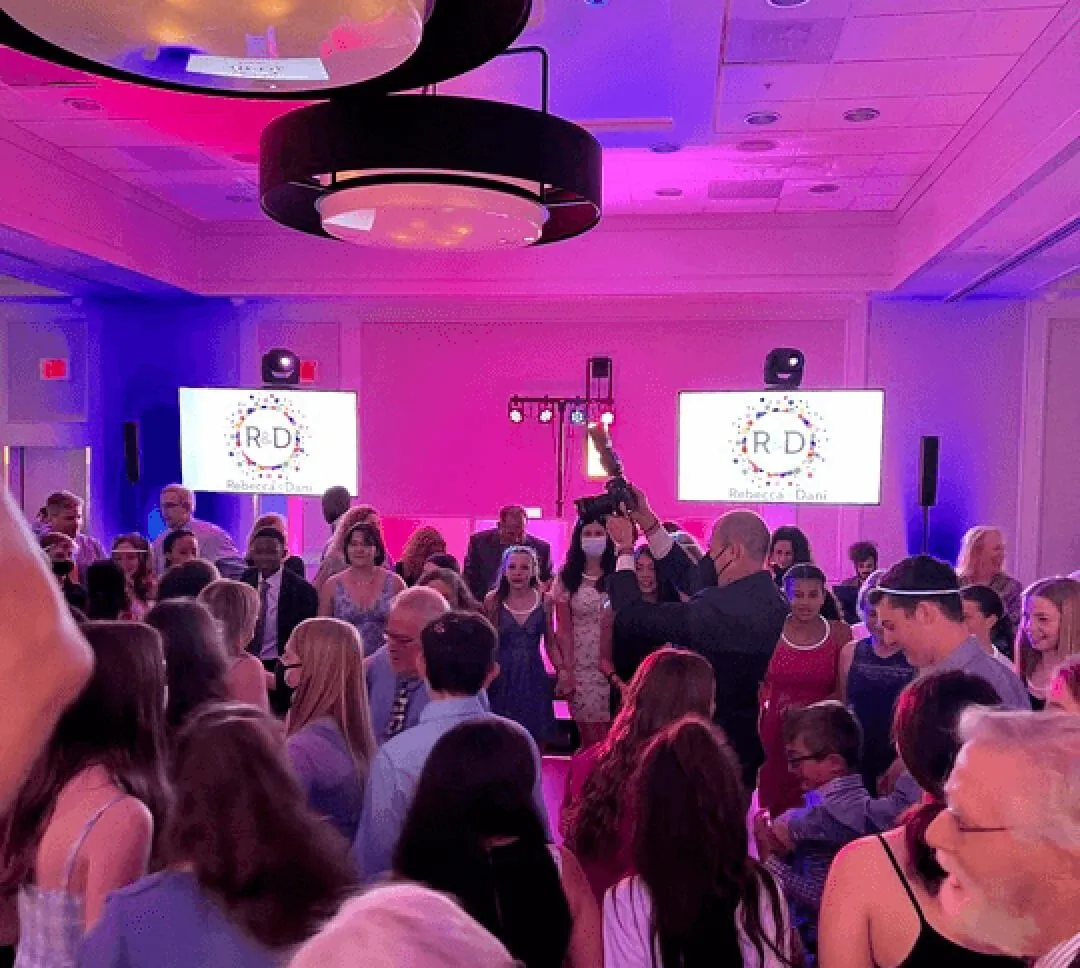
Entertainment. DJ, lighting, motivators, and often photo booth or specialty entertainment fall under this umbrella. As a rough general guide, families who prioritize the party experience commonly land somewhere in the 15-25% range of total spend here, though this varies a lot depending on how much lighting design, staffing and specialty add-ons are included. Families sometimes underestimate this category early, then reallocate toward it once they realize how much the entertainment shapes the actual guest experience compared to, say, upgraded florals.
Where the Rest of the Budget Goes
Beyond the big three, a typical mitzvah budget spreads across:
- Photography and videography, often booked as a bundle, sometimes split between a photographer for the day and a separate videographer for montage and highlight content
- Florals and decor, centerpieces, linens, lounge furniture rentals, and any theming elements
- Invitations and paper goods, save-the-dates, invitations, programs
- Candy or dessert table, a smaller line item but one that adds up quickly with a full display and take-home containers
- Photo booth or specialty entertainment, sometimes bundled with the DJ company, sometimes a separate vendor
- Transportation, relevant if you’re bussing guests, especially teens, between the synagogue service and the reception venue
- Party favors and giveaways, t-shirts, light-up items, personalized giveaways for the kid guest list
- Tips and service charges, easy to forget when estimating a total, and often a meaningful percentage on top of contracted vendor totals
A Common Mistake: Front-Loading Decor, Under-Funding Experience
It’s an easy trap: decor is visual and easy to picture, so families sometimes allocate heavily toward florals and lounge furniture rentals early, then find the entertainment budget squeezed later. The problem is that guests remember how the party felt, whether the dance floor was full, whether the kids had fun, whether the night moved, far more than they remember the specific centerpieces. That’s not an argument against nice decor; it’s an argument for sequencing your budget decisions so entertainment gets locked at a level that matches your priorities before the remaining categories absorb what’s left.
Guest Count Changes Everything
Almost every line item in a mitzvah budget scales with guest count except a few flat-fee categories (photography packages, DJ base rates, certain rental minimums). Before finalizing a guest list, it’s worth modeling out how an extra 20 or 30 guests changes your catering and rental costs, since that’s usually where budget surprises come from later in planning. A jump from 120 to 150 guests, for instance, doesn’t just add per-head catering cost, it can push you into a larger room block, a bigger dance floor rental, additional table linens, and sometimes an additional staffing tier for both catering and entertainment. Families who lock their guest list early, even a rough range, generally build more accurate budgets than families who leave the list open until invitations go out.
Kid Count Versus Adult Count
Mitzvah guest lists are unusual in that they typically include two very different populations: the invited adult guests and the kid guest list, which is often larger and can include friends from multiple schools, camps, and sports teams in addition to the family’s own community. Budgeting separately for each group helps. Adult catering, adult bar service, and adult favors carry different costs than kid-focused elements like a candy bar, arcade games, or a photo booth geared toward tweens. Some families also underestimate how much the kid guest count affects entertainment staffing, a room of 80 twelve-year-olds who all want to be on the dance floor at once generally needs more motivators than the same size adult crowd.
The Timeline Effect on Cost
When you book matters almost as much as what you book. Popular Saturday dates in spring and fall tend to command different pricing across venues and vendors than winter dates or Sunday afternoon celebrations. Families with flexibility on date can sometimes meaningfully lower costs across multiple categories at once by shifting to a less in-demand day, without changing anything else about the event.
Where Families Can Reasonably Trim
If the budget needs to flex, some categories trim more gracefully than others:
- Simplifying florals to fewer, larger arrangements rather than elaborate centerpieces at every table
- Choosing a buffet or station-style meal over a fully plated multi-course dinner
- Scaling back party favors to one meaningful item rather than several small ones
- Adjusting photo booth add-ons (prop packages, custom templates) rather than cutting the booth entirely
- Reducing the number of specialty linens or upgraded chair rentals in favor of the venue’s included options
Categories that are harder to trim without guests noticing: entertainment staffing (motivator count, DJ hours) and core catering quality, since both directly affect how the day feels rather than just how it looks.
Questions to Ask Every Vendor Before You Commit
A budget only holds up if the quotes behind it are apples to apples. Before signing with any vendor, ask what’s included in the base price versus what’s an add-on, whether setup and breakdown time is billed separately, whether there’s a minimum guest count or spend, and what the cancellation or rescheduling policy looks like. This matters especially for entertainment and catering, where a lower headline number sometimes hides a shorter contracted time window or a smaller included staff count than a competing quote.
Getting Real Numbers
Because pricing varies so much by venue, guest count and season, the most useful next step isn’t a generic budget percentage, it’s getting itemized quotes early from your top vendor choices in each category so you’re working with real numbers for your specific event rather than industry averages. Ask for a written breakdown, not just a total, so you can see exactly what’s driving the number and where there’s room to adjust if needed later in planning.
Bottom Line
There’s no universal mitzvah budget template, but there is a sensible order of priorities: lock venue and catering early since they anchor everything else, fund entertainment at a level that matches how much the party experience matters to your family, and treat decor and favors as the more flexible categories if adjustments are needed.
Solender Events, parent company of Maryland’s DJ and Epic Events, works with mitzvah families across Maryland, DC and Northern Virginia at a wide range of budget levels, we’re happy to talk through what a realistic entertainment allocation looks like for your guest count and venue.