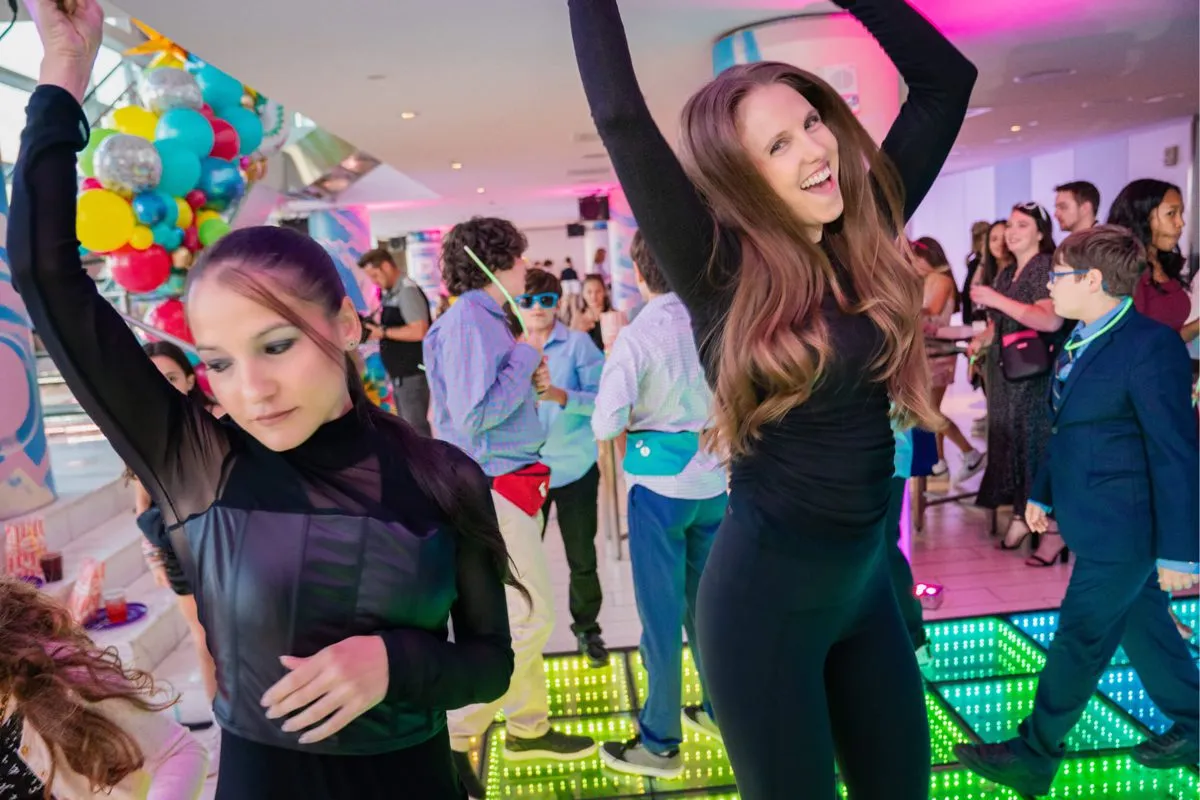
Ask ten families what a “party motivator” does and you’ll get ten vague answers involving the word “energy.” It’s a fair guess, but it undersells a role that, done well, is closest to a cross between a camp counselor, a dance instructor and an air traffic controller. If you’re planning a bar or bat mitzvah anywhere in Maryland, DC or Northern Virginia, understanding this role will change how you staff your entertainment.
The Job, Specifically
A motivator is not the DJ and not the emcee, though on smaller parties one person sometimes wears two hats. The motivator’s job is to physically be on the dance floor with the kids the entire reception, running games, teaching simple choreography, pulling reluctant kids off the wall, and keeping momentum between songs so there’s never a moment where twenty thirteen-year-olds are standing around checking their phones.
Specific tasks a good motivator handles over the course of a night:
- Teaching a simple, repeatable dance (think a line dance or call-and-response routine) early in the party so kids have something to fall back on all night
- Running structured games, limbo, freeze dance, scavenger-style prop games, trivia about the mitzvah child
- Reading the room’s age spread and adjusting difficulty and music tempo accordingly
- Coordinating with the DJ booth via earpiece or hand signals so game transitions land on the right musical cue
- Managing shy kids without singling them out, which is a real skill and not everyone has it
- Keeping an eye on where the mitzvah child is and making sure they’re getting pulled into their own party rather than standing to the side
Why This Role Gets Underrated
Parents often assume a good DJ alone will keep the party moving. A DJ absolutely sets the musical foundation, but a DJ is behind a booth, often at the edge of the room, watching sound levels and song selection. Kids don’t respond to a voice on a microphone from across the room the way they respond to someone standing next to them clapping and pulling them in. That physical, peer-adjacent presence is what motivators add, and it’s the single biggest lever for making a mitzvah dance floor feel alive rather than sparse.
How Many Motivators You Actually Need
This is where families most often under-book. A rough guide based on typical mitzvah guest counts:
- Under 40 kids: two motivators is generally sufficient
- 40-70 kids: three motivators keeps energy consistent across a larger dance floor and avoids one motivator getting stretched thin running a game solo
- 70-100+ kids: four motivators, sometimes with one dedicated to a side activity like a photo booth line or a game station so the main floor doesn’t lose momentum
Room size matters as much as guest count. A sprawling hotel ballroom in Tysons or a country club ballroom in Potomac needs more physical coverage than a tighter space in a smaller Silver Spring or Rockville venue, even with a similar guest list.
Gender Balance and Team Chemistry
Most families ask for a mixed-gender motivator team, and there’s a practical reason: thirteen-year-olds respond differently depending on who’s asking them to dance. A team that’s been working together regularly reads a room faster than motivators paired together for the first time, so when you’re vetting a DJ company, it’s fair to ask whether their motivators are a regular team or assembled per event.
The First Fifteen Minutes Set the Tone
The opening stretch of a mitzvah dance floor is the hardest part of the whole night for a motivator team to manage, because most kids arrive from cocktail hour in small friend clusters and nobody wants to be the first one dancing. A strong motivator team has a specific plan for this window: a simple entrance activity, a name game or icebreaker that doesn’t require dancing yet, and a quick, teachable group dance that lowers the social risk of joining in. Families who skip this planning and expect the floor to fill itself the moment music starts are often surprised by a slow first twenty minutes that a good team could have prevented.
Motivators and the Mitzvah Child Specifically
A detail that’s easy to overlook: the mitzvah child is also a thirteen-year-old at their own party, and it’s genuinely common for them to feel self-conscious or unsure how to lead a room. Good motivators build in specific, low-pressure moments that put the child at the center without putting them on the spot alone, like a call-and-response chant using their name, a spotlight dance with their closest friends already pulled in around them, or a candle-lighting or family dance transition handled with warmth rather than a formal announcement. Ask your DJ company how their motivators typically handle this, since it varies a lot by team.
What a Bad Motivator Booking Looks Like
The most common failure mode isn’t a motivator behaving unprofessionally, it’s simply being understaffed or mismatched to the crowd. A single motivator trying to run a game for 60 kids alone will inevitably lose a chunk of the room to the sidelines while attention is focused on whoever’s actively playing. Another common issue is a motivator team booked for an older, more sophisticated 13-14 year old crowd that still runs younger-skewing games meant for 11-12 year olds, which can read as condescending to a crowd that’s ready for more current music and less overtly childish games.
What to Ask Your DJ Company
- How many motivators are included in the package, and is that number tied to my guest count?
- Have these specific motivators worked together before?
- What’s the plan if my kid group skews younger (11-12) versus older (13-14)? Games and music references land very differently across that gap.
- Is there a lead motivator who coordinates with the DJ on timing?
- What’s the specific plan for the first fifteen minutes when the dance floor opens?
Adult Guests Notice Too
There’s a secondary effect worth mentioning: when the kid party is well-run and self-sustaining, parents relax. A dance floor that needs constant adult intervention to keep kids engaged pulls parents away from their own dinner and conversation. Good motivators effectively free up the adult side of the room to enjoy itself, which is part of why this line item matters more than its price tag suggests.
Budgeting for It
Motivators are typically bundled into a DJ entertainment package rather than billed as a wildly separate line item, but if you’re comparing quotes, ask specifically how many bodies on the floor are included, not just how many hours of DJ service. A lower quote that includes only one motivator for an 80-kid party will almost always cost you more in a flat, disappointing dance floor than a slightly higher quote with three.
The Bottom Line
Motivators are the mechanism that turns music into an actual party for a room full of middle schoolers. Match the headcount to your guest list, ask about team chemistry, and don’t treat this as an afterthought behind the DJ booking. Solender Events, parent company of Maryland’s DJ and Epic Events, staffs motivator teams based on real guest counts and room layouts rather than a one-size package, reach out and we’ll help you figure out the right number for your celebration.