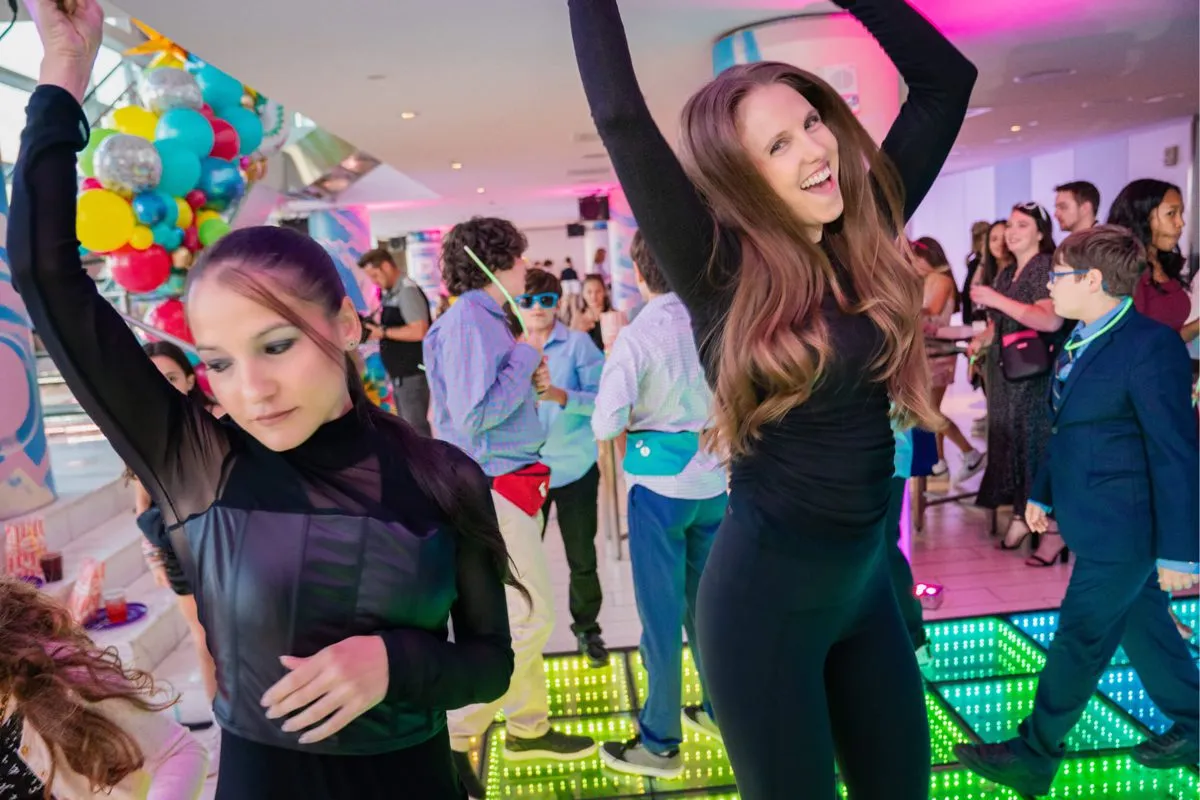
Party games at bar and bat mitzvahs have a longer shelf life than people assume, but the details of how you run them matter more than they used to. A room of twelve- and thirteen-year-olds in 2026 has grown up with short-form video, so pacing and payoff need to be tighter than the version of these games your older cousin remembers from fifteen years ago. Here’s what’s actually holding up.
The Core Principle: Fast Setup, Visible Winner, Quick Reset
Any game that takes more than 60-90 seconds to explain loses the room before it starts. Kids today are used to instant, visual feedback, a game needs a clear winner the whole crowd can see and cheer for, and it needs to end while it’s still fun, not fifteen minutes later when it’s dragging.
Games That Still Work
Shoe game (or sneaker game). Pull a handful of kids up, have them sit back-to-back or side-by-side holding up one shoe each, and ask questions about their friend group or the mitzvah child (“who’s more likely to be late to everything”) where they point to whoever fits. It’s fast, funny, and works because the humor comes from the kids themselves, not scripted content.
Musical chairs, remixed. The classic still lands, especially with a motivator adding a twist, freezing instead of eliminating, or switching to a dance-off for the final two chairs instead of a straight sit-down. Removing the “you’re out, go sit down” sting keeps more kids engaged longer.
Freeze dance with a twist. Standard freeze dance is a reliable opener, but adding themed movement rounds, everyone has to dance like a specific animal, or in slow motion, keeps kids from checking out on repeat rounds.
Prop or scarf dances. Handing out simple props (light-up items, bandanas, oversized sunglasses) for one song at a time gives kids something to do with their hands and noticeably increases participation from the kids who are otherwise reluctant to dance.
Trivia about the mitzvah child. A short round of multiple-choice questions about the guest of honor, displayed or read aloud, works well right after candle lighting when energy needs a lift but before the room is ready for full dancing again.
Simon Says, run fast. Still effective specifically because it’s nostalgic enough that even the “too cool to play games” thirteen-year-olds will half-participate, especially when a motivator keeps the pace brisk and the eliminations quick.
What’s Fading Out
Long-form scavenger hunts and multi-station games that require kids to move between different parts of the venue tend to underperform now, attention drops off before the payoff, and it splits the room in a way that hurts overall dance floor energy. If you want a scavenger-style element, keep it short, contained to one area, and no longer than five minutes.
Matching Games to Age and Group Size
A group that skews toward eleven and twelve tends to respond better to structured games with clear rules (Simon Says, musical chairs). A group skewing thirteen and fourteen often prefers looser, more social formats (shoe game, dance-offs, prop dances) where the humor is peer-driven rather than adult-directed. If your guest list spans both ends, plan a mix rather than picking one lane all night.
Group size changes the math too. Small groups under 25 kids do well with games that put everyone in the action at once. Larger groups of 60-plus need games built around a rotating subset on the floor (five or six kids at a time) with the rest of the room engaged as an audience, otherwise a full-group game becomes chaotic and hard for a single motivator to run.
The Role of Music Selection in Game Success
Games rise or fall partly on the song choice underneath them. Current, recognizable music (rather than adult-era throwbacks) keeps energy high during a game’s setup and reset moments. Ask your DJ how often their music library and game references get refreshed, a DJ still leaning on the same reference points from five years ago will read flatter to a thirteen-year-old audience than one who’s current.
Reading the Room and Knowing When to Cut a Game Short
Even a well-run game can misfire on a given night, maybe the group is more reserved than expected, maybe a different activity has more energy behind it in the moment. A skilled motivator watches the crowd’s actual energy rather than sticking rigidly to a planned script, and is willing to cut a game short after 90 seconds if it’s clearly not landing rather than dragging it out to completion. This instinct, knowing when to pivot, matters more than having a longer list of games prepared, since even the best game list fails if it’s run without reading the room.
Involving Parents and Chaperones Without Losing the Kids
Some mitzvah games work best with a parent or two pulled in for a round, which usually gets a big laugh from the kid crowd watching their parents attempt the same challenge. This works well as an occasional moment, not a recurring bit, since kids generally want the spotlight and dance floor to stay focused on their peer group for most of the night. A motivator who can read when a parent cameo will land versus when it will pull energy away from the kids is doing this well.
Screens and Phones
It’s worth having a plan, gently enforced, for phone use during high-energy segments. Many DJ and motivator teams handle this by making participation itself the draw, if the game is genuinely fun and fast, most kids will put phones down without being told. Heavy-handed “no phones” announcements tend to backfire; better game design solves more of this problem than rules do.
Building the Game Sequence Into Your Timeline
Rather than treating games as filler, place them deliberately: one right after dinner starts to re-energize a room settling into food, one right before the candy or dessert table reveal to build anticipation, and one near the final 30 minutes to squeeze out a last surge of energy before the closing song. A DJ or motivator team that’s planning this sequencing with you in advance, rather than winging it in the room, will produce a noticeably better night.
Coordinating Games With Photography and Video
If you’re investing in photography or videography, let your photo and video team know roughly when games are planned so they can be positioned to catch the reactions, not just the mitzvah child dancing. Some of the best candid shots and video moments from a mitzvah come from a well-run shoe game or a parent cameo during Simon Says, and that only happens if the photo team knows it’s coming.
Final Thought
The mechanics of great mitzvah games haven’t changed as much as the execution needs to. Keep it fast, keep it visual, keep the mitzvah child and their friends at the center of the humor, and match the format to your specific group’s age range. Solender Events, parent company of Maryland’s DJ and Epic Events, builds game sequences into every mitzvah timeline based on the actual kid group, reach out and we’ll talk through what will work for yours.