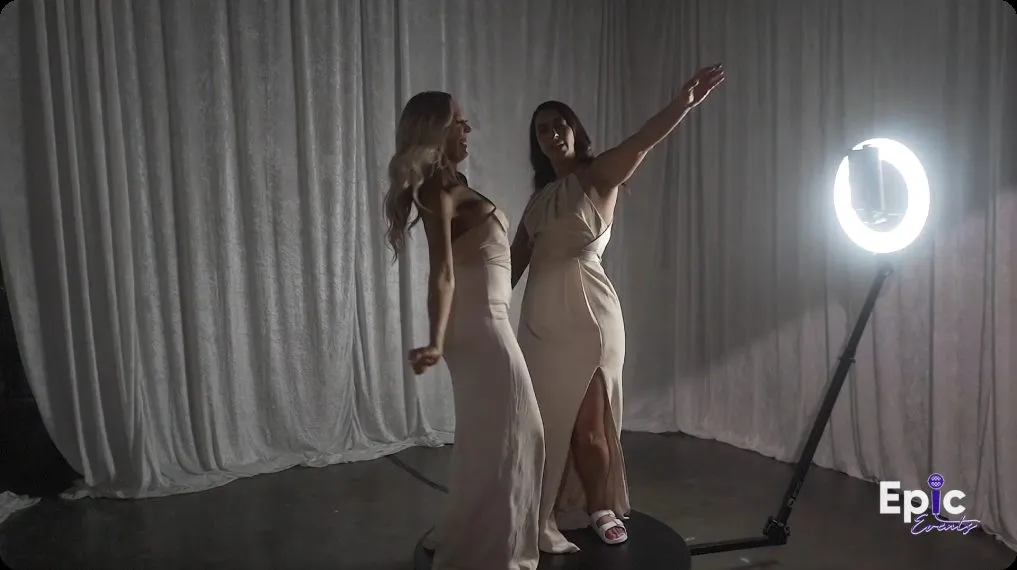
If you’ve been to a wedding or sweet sixteen in the last few years, you’ve probably seen it: a small platform, a camera arm spinning slowly overhead, and a cluster of guests striking poses in slow motion while everyone else records them on their phones. The 360 video booth has become one of the most requested add-ons we book, and it earns the reputation. Here’s what makes it work, and what it needs from your event to actually deliver.
What a 360 Booth Actually Is
A 360 booth uses a robotic camera arm mounted on a rotating base. One to four guests stand on a platform in the center while the arm spins a full circle around them, usually over three to eight seconds, capturing dramatic slow-motion footage from every angle. The result gets edited in near-real time with music, text overlays, and often a client’s custom branding, then delivered to guests’ phones within a minute or two.
It’s less a photo op and more a tiny performance. That’s exactly why people line up for it.
Space and Power Requirements
This is the part clients underestimate most often. A 360 booth needs a genuine footprint, typically an 8x8 to 10x10 foot clear area, with several additional feet around it for the line to form without crowding the platform. Ceiling height matters too: the arm needs clearance overhead, so low-ceilinged basement venues or tented spaces with hanging decor can be a problem if not planned for in advance.
It also needs a dedicated, stable power source. We bring our own equipment and cabling, but venues with limited outlet access or strict cabling rules should be flagged to your planner or DJ team well before the event, not discovered the day of.
Flooring matters too. The platform needs a level, stable surface to spin safely and consistently, so uneven outdoor terrain, thick shag rugs, or a raised stage without adequate bracing can all complicate setup. If your event is outdoors, ask specifically whether the booth can be placed on the actual surface planned, grass, gravel, or a hard patio, since not every surface is suitable without additional flooring brought in.
Who Loves It (and Who Doesn’t)
The 360 booth performs best with guest lists under 45, especially teenagers and young adults who are comfortable performing for a camera. Sweet sixteens, quinceaneras, bar and bat mitzvahs, and college-age milestone birthdays are where we see the longest, happiest lines.
It’s a tougher sell for more reserved crowds. Older guest lists, formal corporate events, or crowds who are self-conscious about being filmed tend to engage with it less enthusiastically than they would with a simple print booth. That doesn’t mean skip it, plenty of weddings run a 360 booth successfully, but it helps to know your audience going in.
Keeping the Line Moving
The single biggest risk with a 360 booth is a runaway line that eats into other parts of the night. A few things keep it under control:
- An attendant who directs traffic. Someone explaining the pose, counting down, and moving the next group into position keeps each turn to roughly 15-20 seconds instead of a minute of hesitation.
- A clear start and end time. Running the booth during a defined window, cocktail hour and the first hour of dancing, for example, rather than the entire event, keeps energy high without becoming background furniture.
- Music and prompts. Attendants who hype the platform and give guests something to do (a spin, a jump, a prop toss) produce noticeably better footage than a silent, awkward ten seconds.
A group size cap is worth setting too. Four guests on the platform at once usually produces clean, energetic footage; six or seven crowded onto the same small platform tends to produce footage where nobody is framed well and the line moves slower because groups take longer to organize themselves.
Props and Poses That Actually Work on Camera
Not every prop translates to slow-motion video. Confetti and flower petals look spectacular thrown at the right moment. Oversized signs and simple hand gestures read clearly even at a distance. What doesn’t work as well: small handheld props that get lost in motion blur, or anything requiring guests to hold still, since stillness is the one thing this format isn’t built for.
If you’re using confetti or petals, confirm with your venue first, since some ballrooms and outdoor sites restrict loose confetti due to cleanup requirements, and a few substitute biodegradable petals or approved alternatives instead.
Delivery and Sharing
Most 360 packages deliver the finished video directly to a guest’s phone via text message or a QR code scan within a minute or two of filming, plus a shareable online gallery for the full event. If branding matters, corporate logos, a monogram, a hashtag, those get baked into the video overlay automatically so every share carries it along.
Pairing It With Other Formats
Because a 360 booth is high-energy and social-first, it pairs naturally with a quieter counterpart elsewhere in the room. We often set a 360 booth near the dance floor for the after-dinner crowd while running a print booth or glam booth in a calmer corner for guests who want a traditional photo or a family portrait. That combination covers both ends of your guest list without either format feeling crowded out.
Staffing Considerations
An unattended 360 booth almost never works as well as one with a dedicated operator on site the entire time it’s running. Beyond directing traffic, an attendant troubleshoots technical hiccups in real time, keeps the platform clean between guests (spilled drinks and confetti buildup are a real issue over several hours), and makes judgment calls about crowd size and safety that automated software can’t. When comparing quotes, confirm whether attendant staffing is included for the full rental window or billed separately.
Planning Checklist
Before booking a 360 booth, confirm with your venue and planner:
- A confirmed 8x8 to 10x10 clear floor area with adequate ceiling clearance
- Access to power near the setup location
- Whether the booth will run during cocktail hour, dinner, or the dance floor portion of the night
- Whether you want branded overlays, a hashtag, or a monogram built into the video
- How prop selection will be handled, and whether confetti or petals are allowed by the venue
- Whether the surface it will sit on is level and appropriate for the equipment
A Quick Word on Budget
360 booths involve more specialized equipment and typically more attendant coordination than a standard print booth, so expect pricing in the middle-to-upper range of photo booth options in the DMV market. The exact number depends on hours booked, staffing, and any branding or prop add-ons, so it’s worth getting a detailed quote rather than comparing headline prices across vendors.
If you’re weighing a 360 booth against other formats for your wedding, milestone birthday, or corporate event, Solender Events can walk through your venue’s layout and guest list and tell you honestly whether it’s the right fit, no upsell required.