The backdrop is the part of a photo booth setup clients spend the least time thinking about and end up caring about most once they see the photos. A backdrop that clashes with your color palette or fights with your venue’s existing decor shows up in every single print your guests take home. Here’s how to choose one that actually works with your event instead of against it.
Start With Your Color Palette, Not Your Theme
The most common mistake we see is choosing a backdrop based on a loose theme (florals for a garden wedding, string lights for anything romantic) rather than the actual color palette of the event. A backdrop needs to sit comfortably next to your linens, florals, and lighting in a photo, not just thematically match the vibe in your head.
Pull your existing palette, your color swatches, floral order, or brand colors for a corporate event, and choose a backdrop that either complements those tones directly or stays neutral enough to let them stand out. A backdrop in a competing color, hot pink next to a burgundy-and-gold wedding palette, for example, will fight your florals in every photo rather than frame them.
Sequin and Shimmer Backdrops
Sequin walls remain popular because they photograph well under flash, reflecting light back at the camera and adding sparkle without needing additional lighting equipment. They work best for higher-energy events, milestone birthdays, bar and bat mitzvahs, and receptions, where a bit of shimmer matches the mood.
They’re a weaker fit for formal, editorial-style events or glam booth setups, where the reflective surface can compete with more deliberate portrait lighting rather than complementing it. Reversible sequin panels, gold on one side and white or silver on the other, are worth asking about if you want the option to flip the look between cocktail hour and the dance floor portion of the night without swapping equipment.
Solid and Textured Neutral Backdrops
A clean charcoal, cream, or muted textured backdrop is the safest and often most flattering choice, especially for glam booths, roaming setups, or any format where you want the guests, not the background, to be the focus. Neutral backdrops also age better in photos; a heavily trend-driven backdrop can look dated in five years, while a simple textured neutral holds up.
This is the right call for weddings that want their photo booth prints to look cohesive with the rest of their formal photography, and for corporate events where a busy backdrop would distract from branding. Boucle, linen-textured fabric, and simple pleated drape all fall in this category and tend to photograph as intentional rather than plain, which is the quality you actually want from a neutral choice.
Custom Step-and-Repeat Backdrops
A step-and-repeat, a backdrop printed with a repeating logo, monogram, or pattern, is standard for corporate activations, milestone anniversaries, and any event where branding matters. It turns every photo into a piece of marketing or a personalized keepsake simultaneously.
For weddings, a step-and-repeat with a couple’s monogram and wedding date creates a cohesive, on-brand look across every print, and works especially well for open-air print booths where the full backdrop is visible in the frame. Give your vendor final artwork or approve a proof at least a couple of weeks ahead of the event; printed fabric backdrops take real production lead time, and a rushed order limits your options to whatever’s already in stock.
Floral and Greenery Walls
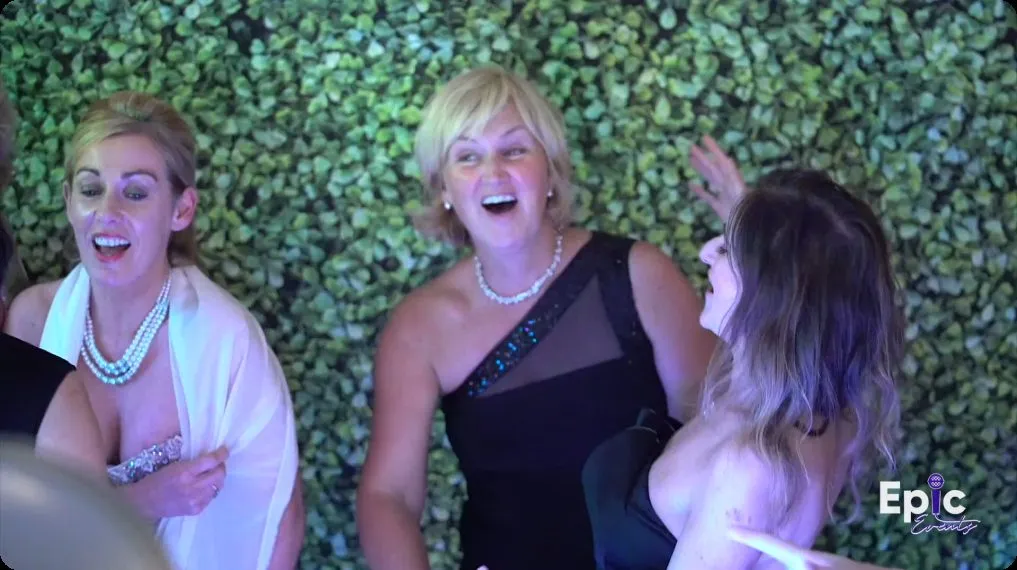
Floral backdrops photograph beautifully but require more planning: they’re heavier, need sturdier stands, and should be color-matched carefully to your actual floral order rather than a generic greenery wall that clashes with your bouquets. When done well, they double as a stand-alone decor piece for guests to photograph even outside of the booth line.
They work best for garden-style weddings, bridal and baby showers, and spring or summer events. They’re a poor match for a 360 booth setup, since the platform’s spinning camera needs a full 360-degree environment rather than a single flat backdrop. If a floral wall is a must-have, coordinate directly between your florist and your photo booth vendor on install timing, since floral walls are usually built on site and need a dedicated window before doors open.
Backdrops for 360 and Mosaic Setups
Because a 360 booth captures a full circle around the subject, a flat backdrop doesn’t apply the same way; instead, the surrounding environment (uplighting, drapery, or a circular curtain enclosure) becomes the visual frame. If backdrop consistency matters for a 360 booth, ask about draped fabric surrounds or LED accent lighting that can be color-matched to your palette without needing a printed backdrop at all.
Mosaic photo walls function differently too: the “backdrop” is really the wall of individual guest photos itself, so the more relevant design decision is the final mosaic image, a couple’s portrait, a company logo, or an event graphic, that guest photos assemble into over the night.
Matching the Backdrop to the Booth Format
- Open-air print booth: Any backdrop style works; this is the most visually flexible format, so lean into a bold custom design if branding or theme matters.
- Glam booth: Stick to solid, uncluttered neutrals so studio-style lighting reads clearly.
- Roaming booth: Often skips a backdrop entirely, using the venue itself (cocktail hour decor, architecture) as the backdrop.
- Green screen: Backdrop color is functional, not decorative, since the green panel gets replaced digitally, so any scene can be composited afterward.
Sizing the Backdrop to Your Guest Count and Booth Format
A backdrop that’s the right color but the wrong size still looks off in photos. Standard backdrop widths run roughly 7 to 10 feet, which comfortably fits two to six people depending on the booth’s camera distance. If you’re planning large group shots, milestone birthday parties and mitzvahs especially tend to want ten or more people crammed into a single frame, confirm your vendor is bringing a wider backdrop and has positioned the camera far enough back to capture the whole group without cropping heads or feet.
Lighting Changes How a Backdrop Reads
The same backdrop can look completely different depending on the ambient light in the room. A backdrop that looks rich and saturated under bright, even lighting can look flat or muddy in a dim ballroom with amber uplighting, and a backdrop that looks crisp under natural daylight at an afternoon garden ceremony can look washed out once the sun goes down and the booth is running on its own lighting kit. Ask whether your booth includes its own dedicated lighting rig separate from the venue’s ambient lighting; most professional open-air and glam booths do, specifically so backdrop and subject lighting stay consistent no matter what the room around it is doing.
Common Mistakes We See
- Choosing a backdrop off a small screen thumbnail without checking the physical texture or exact shade in daylight and under warm venue lighting.
- Picking a backdrop that matches the invitation suite but not the actual florals or linens, which are usually the elements guests are standing closest to in the photo.
- Assuming a backdrop that looked great at a friend’s wedding will translate directly to a different room with different ceiling height, wall color, and ambient light.
- Forgetting to tell the booth vendor about a last-minute venue change, since a backdrop chosen for one room’s proportions and lighting may not suit a different space.
A Few Practical Tips
- Bring backdrop swatches or photos to your final planning call so your booth attendant can confirm the physical material matches what you approved online; fabric and print can look different in person than on a screen.
- Consider venue lighting before finalizing a backdrop color. A dim reception hall can wash out a light pastel backdrop, while a bright, sunlit tent can overpower a very dark one.
- If you’re combining two booth formats, coordinate backdrops so prints from both look like they belong to the same event rather than two unrelated setups.
- Ask what backdrop options are included in your package versus available as an upgrade; premium sequin, floral, or fully custom printed backdrops are often priced separately from the base rental.
Getting It Right
The backdrop isn’t a minor styling detail, it’s in every single photo your guests take home. Taking the time to match it to your actual palette and venue lighting, rather than a generic theme, is what separates a photo booth that looks like an afterthought from one that looks like it was designed as part of the event.
If you’re not sure which backdrop style fits your color palette or venue, Solender Events can review your details ahead of time and recommend options that will actually photograph the way you’re picturing them.