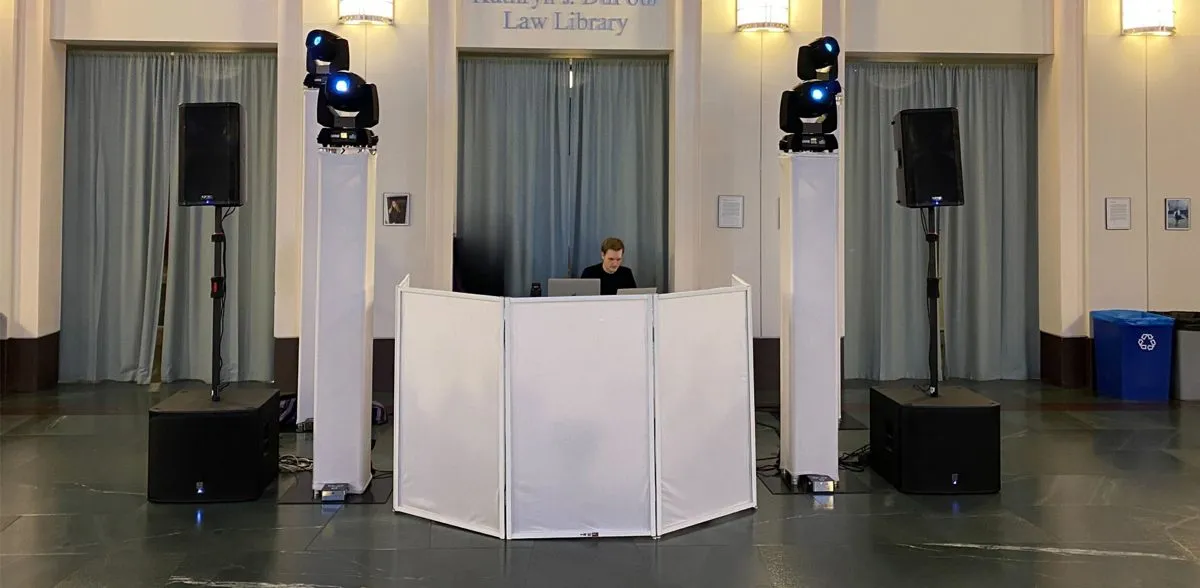
Tent weddings on farms across Loudoun and Frederick counties, on Eastern Shore waterfront properties, and on private estates throughout the DMV are some of the most beautiful events we work. They’re also the events with the highest chance of something going sideways in the final week, and it’s almost never the tent itself. It’s power.
Why Power Planning Is Different for a Tent
A hotel ballroom or established event venue has existing electrical infrastructure: dedicated circuits, distribution panels, and staff who already know the building’s capacity. A tent on a farm field has none of that. Every watt of power for lighting, sound, catering equipment, HVAC, and often even basic outlets for hair and makeup in the bridal suite has to come from somewhere, usually a generator, and has to be planned as its own system from scratch.
This is the single biggest planning gap we see with couples booking farm and estate venues. They’ve chosen a gorgeous property, but nobody has sat down and added up the actual electrical load the day will require.
What Actually Draws Power
It’s easy to assume a DJ setup and some string lights are a light load. In practice, a fully produced tent wedding draws power from several directions simultaneously:
- DJ and sound system: speakers, subwoofers, mixing equipment, wireless microphones, and monitor speakers if there’s a band or additional performance element.
- Lighting: uplighting is usually battery-powered and doesn’t draw from the generator, but moving head fixtures, a dance floor lighting rig, string lights, chandeliers, and any LED wall or gobo projection all need dedicated circuits.
- Catering: this is often the largest and most underestimated load. Warming ovens, refrigeration, coffee stations, and sometimes full cooking equipment can draw far more power than all the entertainment production combined.
- Climate control: tent HVAC units, whether heating for a fall Eastern Shore wedding or air conditioning for a humid August evening in Frederick, are power-hungry and often run continuously through the event.
- General power: charging stations, string lights along a pathway, restroom trailer power, and lighting for a bridal suite or getting-ready tent.
Generator Sizing Isn’t a Guess
Generators are typically sized in kilowatts, and a common mistake is treating this as a single “big enough” number rather than mapping specific loads to specific circuits. Good practice separates power into at least two, often three, independent generator systems:
- One generator dedicated to catering, since kitchen equipment often has sudden power spikes (an oven cycling on, a fryer heating) that can cause voltage fluctuations affecting anything sharing that circuit.
- One generator dedicated to entertainment and production: DJ sound, lighting, and any video wall, kept separate from catering specifically so a kitchen power spike doesn’t cause a flicker or, worse, a dropout during the first dance or toasts.
- A third generator or subpanel, on larger events, for general guest-facing power like charging stations, restroom trailers, and pathway lighting.
Whoever is providing the generators, often the tent company or a dedicated event power vendor, needs a clear load list from every vendor well in advance, not a guess made the week of the event. As the entertainment company, we always provide our specific amperage and circuit requirements to the tent or power vendor directly rather than leaving it to a third party to estimate.
Quiet Matters More Than People Expect
Generators are loud, and a generator parked too close to the tent, or on the wrong side relative to wind direction, can bleed noise into the ceremony or into quiet dinner moments. We always ask about generator placement relative to the tent’s opening, guest seating, and the direction of prevailing wind, and we push for generators to be positioned as far from the tent as cable runs reasonably allow, sometimes behind a hedge row, barn, or other natural sound barrier common on farm properties.
Weather Is Part of the Power Conversation
Farm and estate tent weddings across Loudoun, Frederick and the Eastern Shore are exposed to weather in a way indoor venues simply aren’t. A summer storm can mean a sudden shift from ceiling fans to needing full climate control mid-event, or ground conditions changing rapidly enough that cable runs originally planned across dry grass need rerouting to avoid standing water. We build contingency into the power plan for weather swings, especially for events scheduled during summer storm season or shoulder-season events in early spring and late fall where temperature swings between afternoon and evening can be dramatic.
Lighting Considerations Specific to Tents
Tents create their own lighting challenges beyond power. Tent fabric, especially the sailcloth style popular for upscale farm weddings, transmits and diffuses light differently than a solid ceiling, which changes how uplighting and string lighting read compared to an indoor room. Clear-top tents present an additional variable: daylight and sunset timing directly affect when lighting cues become visible, meaning a lighting plan for a June wedding with a 8:30pm sunset needs a different cue schedule than an October wedding where it’s dark by 6:30.
Sidewalls, when used for weather protection or evening chill, also change the acoustics and the way uplighting bounces around the tent perimeter, something worth testing during setup rather than assuming it will look the same as an open-air tent.
A Realistic Planning Timeline
For a fully tented event, we recommend nailing down the power plan at least 60 to 90 days out, not the final week. That gives enough time to:
- Get a complete equipment and load list from every vendor (catering, entertainment, tent company, any specialty vendors like a live band or additional lighting designer).
- Confirm generator sizing and quantity with the power vendor based on that combined list.
- Walk the property to finalize generator placement, cable runs, and any ground protection needed for cables crossing walkways.
- Build a weather contingency plan for climate control and cable routing.
The Bottom Line
Tent weddings fail on power far more often than they fail on weather, décor, or anything guests actually notice in the moment. The tent looks beautiful either way; what guests actually experience, comfortable temperature, working sound, lighting that holds through the whole reception, depends entirely on whether the power plan was built as carefully as the seating chart.
If you’re planning a tent wedding on a farm, estate, or waterfront property anywhere in the DMV, Solender Events works directly with your tent and power vendors to make sure entertainment and lighting have exactly the power they need, with nothing left to guesswork on the day.