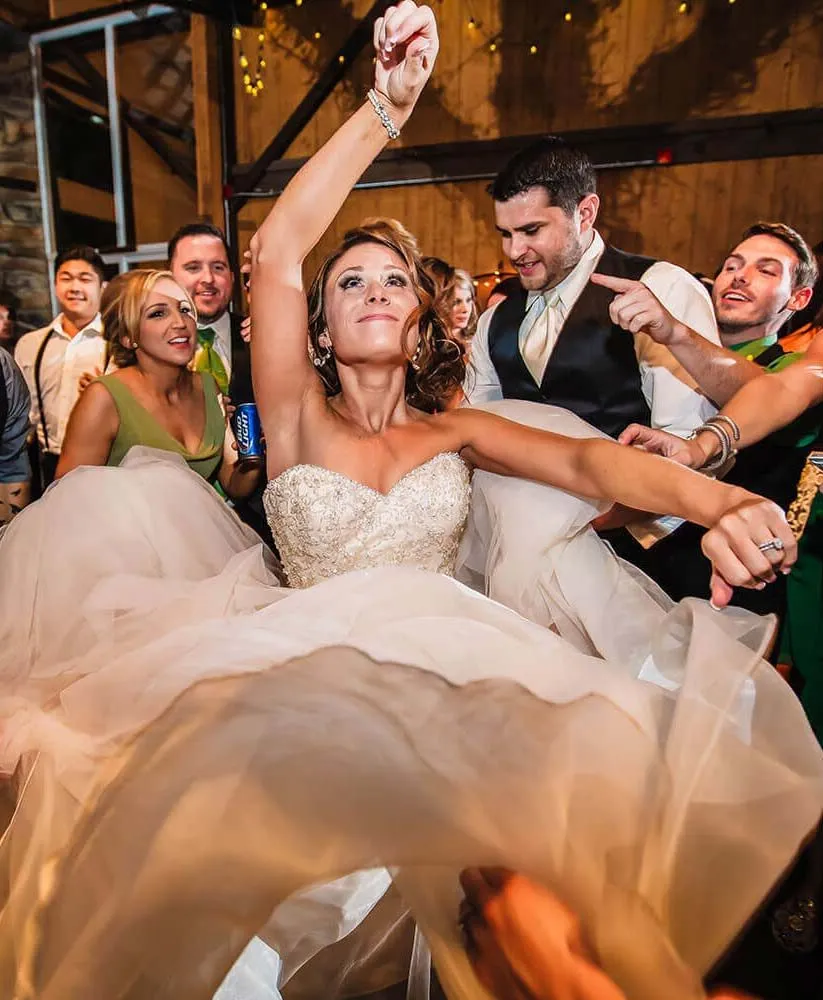
Every couple wants their first dance song to feel meaningful, but meaning and danceability are two different problems, and most couples only solve for one of them. After coordinating first dances at venues from the Chesapeake Bay Beach Club to rowhouse rooftop weddings in DC, the pattern is clear: the songs couples regret are almost always the ones chosen for lyrics alone, without ever testing how the song actually feels to move to in front of a room of people.
Start with what the song needs to do
Your first dance song has two jobs at once. It needs to mean something to the two of you, and it needs to work as a performance in front of 80 to 200 people who are all watching you. A song can be your favorite in the car and still be awkward to sway to for three and a half minutes in formalwear. Before you fall in love with a title, think about tempo, length, and structure.
Tempo matters more than genre
Most couples do not know how to dance formally, and that is completely normal, most guests cannot tell the difference between a rehearsed routine and a comfortable sway. What guests do notice is a song that is too fast to sway to gracefully, or one with a chaotic tempo shift in the middle. A tempo in the range of a slow ballad, roughly 60 to 90 beats per minute, gives you room to move naturally without feeling rushed or stiff.
Watch the runtime
Full-length album versions often run four and a half to six minutes, which is a long time to be the only two people moving in a room. Most DJs will edit your first dance down to two and a half to three and a half minutes, trimming instrumental intros, extended bridges, or a long fade-out. Ask your DJ about this directly; a good one will offer to build a custom edit rather than playing the raw track.
Consider the lyrics, but do not over-analyze them
It is fine to choose a song for one specific line or verse that means something to you, even if the rest of the lyrics are unrelated to your relationship. Nobody in the room is doing close reading of your first dance lyrics except you. What matters more is the overall feeling the song creates: warm, romantic, celebratory, nostalgic, whatever your relationship actually is.
Common categories that work well
Couples in the DMV tend to land in a few reliable buckets: a song from when you first started dating, a song from your wedding’s musical genre if you have a shared taste like jazz standards or acoustic singer-songwriter, a cover version of a familiar song that feels more intimate than the original, or an instrumental arrangement of a song with sentimental lyrics if you want the emotional weight without narrating your relationship out loud to the room.
What to avoid
Steer away from songs about breakups, longing, or unrequited love, even if the melody is beautiful. It happens more often than you would think, someone picks a gorgeous ballad without registering that the lyrics are actually about heartbreak. Also be cautious with extremely trendy songs that may feel dated in wedding photos and videos five or ten years from now; classics tend to age better on video than whatever topped the charts the month of your wedding.
Test it in the room, not just in your headphones
If possible, ask your DJ to play the edited version through actual speakers before the wedding, even briefly at a final planning meeting. A song that sounds intimate through earbuds can feel thin or oddly paced through a ballroom sound system. This is a five minute check that prevents a surprised reaction on the actual day.
What if you and your partner cannot agree
This comes up more than couples expect. A workable compromise is a mashup or transition edit, where the song shifts from one artist’s version to a different, more upbeat version partway through, effectively giving each partner a moment that reflects their taste. Another option is choosing separately for the first dance and a later parent dance or anniversary dance, so both preferences get represented somewhere in the night.
Practice, briefly
You do not need choreography, but ten minutes of practice in your living room, figuring out basic positioning, who leads, how you will handle a dip or spin if you want one, removes most of the awkwardness that couples worry about. If either of you is genuinely anxious about being watched, ask your DJ or planner about a “invite guests in after the first thirty seconds” approach, where you start the dance privately and then guests join in on the floor, which shortens the amount of time you are dancing alone under full attention.
Coordinate with your photographer and DJ
Tell your photographer if you plan any specific move, like a dip or a spin, so they can be positioned for it rather than missing the moment while adjusting settings. Tell your DJ your preferred entry into the dance, whether you want an announcement and a pause before the music starts, or a smoother transition directly out of your grand entrance.
Where in the timeline the first dance actually belongs
Couples often assume the first dance has to happen the moment they walk into the reception, but there is no rule requiring that, and where you place it changes the feel of the room. A first dance immediately after your grand entrance works well if you want a clean, quiet moment before the room gets loud with cocktail chatter. Placing it after dinner, right before toasts or cake cutting, gives guests a chance to settle in first and often produces a more attentive, quieter room since people have already eaten and are not distracted by service staff moving between tables. Some couples place it as the transition directly into open dancing, which works well if you want the emotional moment to flow immediately into the party rather than sitting as a standalone pause.
Handling a first dance with a live band versus a DJ
If you are working with a live band rather than a DJ, the same tempo and length principles apply, but you will want to confirm the band can actually perform the specific arrangement you want, since not every band can replicate a studio recording’s exact instrumentation or key. Bands often suggest a slightly reworked arrangement of a familiar song, which can be a nice compromise if your first choice is not realistically performable live. If you want the exact recorded version, a DJ or hybrid setup that plays the studio track is usually the more reliable choice.
When to loop in family before finalizing
If your first dance song has any special history involving a parent, a late family member, or an inside joke among your wedding party, it can be worth giving a heads-up to whoever might have a strong reaction, especially if the song choice will be a surprise reveal to some. This is not required, but it prevents an awkward gap between your expectation of the moment and a guest’s confused reaction in the front row.
The bottom line
A first dance song should feel true to your relationship and be genuinely comfortable to move to for three minutes in front of family and friends. Choose something meaningful, check its tempo and length honestly, get a professional edit if the raw track needs trimming, and give yourselves five or ten minutes of practice so the moment feels like yours instead of a performance you are unsure about.
If you want help narrowing down first dance options or getting a custom edit built ahead of your wedding, Solender Events works through this with every couple as part of our planning process.