Couples usually build their wedding timeline around vendor logistics: when the caterer needs to plate dinner, when the photographer needs golden hour light, when the venue’s contract ends. Those constraints are real, but they are not the same thing as an energy plan for your guests. After running receptions at everywhere from the Bethesda North Marriott to backyard tents in Loudoun County, the pattern that keeps a dance floor full has less to do with the clock and more to do with sequencing.
Start with the end time and work backward
Most DMV reception venues give you a four to five hour window from cocktail hour to last call. Before you fill in a single detail, write down your true end time, then subtract fifteen minutes for a proper last song and send-off. Everything else gets built backward from there, not forward from cocktail hour, because couples who plan forward almost always run out of time for dancing.
Cocktail hour: 45 to 60 minutes
This is not filler time. Guests are forming their first impression of the night’s energy while they wait for you to finish photos. Live music, a small ensemble, or a DJ playing warm, conversational music works better here than high-energy dance tracks, which create a mismatch when guests walk into a formal dinner room expecting to sit down.
Grand entrance and welcome: 5 to 10 minutes
Keep the wedding party entrance tight. Long, individually announced entrances for twelve bridesmaids and groomsmen can eat fifteen minutes guests spend standing and waiting. A DJ who keeps this brisk and energetic, then moves straight into your entrance as a couple, sets a pace that carries into dinner.
First dance, welcome toast, and dinner service: 45 to 75 minutes
There are two common structures in the DMV: first dance immediately after your entrance, or first dance held until after dinner right before open dancing begins. Both work. The first gets an intimate, less rushed first dance while guests are freshest. The second builds anticipation and flows directly into open dancing without a dead stretch. Choose based on whether you want your first dance photographed in full light through a room, which matters at venues like the Inn at Perry Cabin with big windows facing the water.
Toasts: 10 to 15 minutes total
Cap it. Ask your best man and maid of honor for a soft two to three minute target each, and if parents are speaking too, budget accordingly. Toasts that run twenty-five minutes combined are the single most common reason a reception’s momentum stalls before dancing even starts.
Parent dances and family moments: 10 minutes
Father-daughter and mother-son dances, if you are doing both, work best back to back rather than spread across the night. Guests stay emotionally engaged for two songs in a row; scattering them dilutes the moment and creates awkward restarts to the party’s energy.
Cake cutting: 5 minutes, placed strategically
Cake cutting is a photo moment, not a music moment, but where you place it affects your dance floor. Cutting the cake right as dinner plates clear and right before open dancing creates a natural bridge into high energy. Cutting it an hour into dancing interrupts momentum you already built and rarely gets it back at the same level.
Open dancing: the largest single block, 2 to 2.5 hours
This is where the DJ’s read of the room earns its keep. A rough shape that works across most DMV crowds:
- First 20 to 30 minutes: high energy, familiar, broadly appealing songs to get maximum guests on the floor immediately after dinner while energy is naturally high.
- Middle stretch: this is where genre variety, era mixing, and reading specific tables pays off. This is also where a planned interactive moment, like a bouquet or garter toss if you are doing one, or a shoe game, can reset energy without killing it.
- Last 30 to 45 minutes: this is traditionally where energy should peak again before the end, not taper off. Save some of your highest-impact songs for this window rather than front-loading everything early.
The last song and send-off: 10 to 15 minutes
Whether you are doing a sparkler exit at a Frederick countryside venue or a simple last dance in a downtown DC ballroom, tell your DJ in advance so they can announce it properly and get guests positioned. A send-off that catches guests by surprise loses half its intended photos.
Building a Buffet or Family-Style Dinner Into the Timeline
Plated dinner service and buffet or family-style service move at very different speeds, and the timeline needs to reflect that. A plated dinner for 150 guests typically moves in a predictable, staggered rhythm course by course, which gives a DJ natural windows to layer in toasts or family dances between courses. A buffet, by contrast, creates staggered table-by-table release times that can stretch total dinner length by twenty minutes or more compared to plated service, and family-style service falls somewhere in between depending on how many dishes are being passed. If your caterer is running buffet or family-style service, build in extra time for this block specifically, and talk to your DJ about filling that longer window with background music that doesn’t peak too early.
Adjusting the Timeline for a Late Ceremony Start
Not every wedding has a mid-afternoon ceremony with a long cocktail hour buffer. Weddings with an early evening ceremony, common for fall and winter DMV dates when daylight is limited, often compress the gap between ceremony and reception significantly. In these cases, cocktail hour sometimes needs to shrink to 30 minutes rather than a full hour to protect dancing time later, and photography needs to be planned even more tightly around whatever daylight remains. Couples getting married after 5pm in October through February should talk to their photographer and DJ together about how a shorter window affects both photos and the reception schedule.
Religious and Cultural Timeline Variations
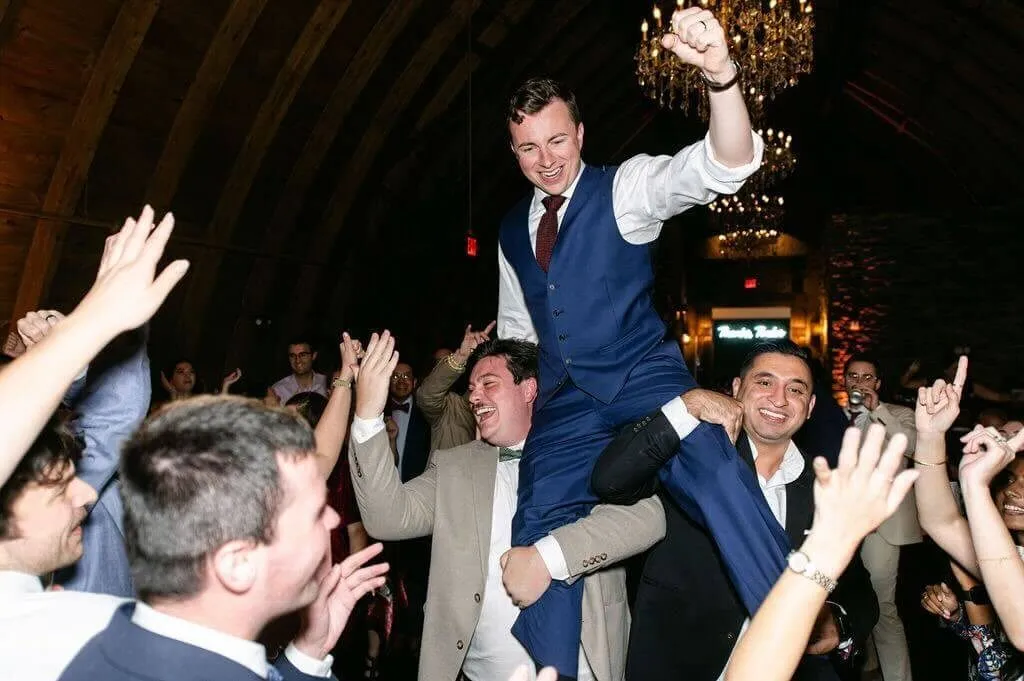
Certain religious and cultural wedding traditions add specific blocks that a generic timeline template doesn’t account for. A hora at a Jewish wedding typically needs 10 to 15 minutes of dedicated, high-energy time and works best placed early in open dancing while energy is fresh and the chair-lift moment can draw a full crowd. Receptions following an Orthodox or multi-hour ceremony sometimes compress the reception window significantly, which changes how much can realistically fit into toasts, dances, and open dancing. If your wedding includes traditions like these, tell your DJ and planner early so they’re built into the master timeline from the start rather than squeezed in as an afterthought once the rest of the schedule is already set.
Common timeline mistakes we see across the DMV
Scheduling the bouquet and garter toss back to back with no music between them turns a fun tradition into a lull. Placing a band or DJ set break in the middle of dinner without warning guests confuses the room. And cramming too many special dances, toasts, and traditions into a short reception window at the expense of open dancing time is the most common regret couples mention after the fact, because open dancing is what most guests actually remember.
Build in slack
No timeline survives contact with a real wedding day exactly as written. Photography runs ten minutes long, a groomsman’s toast runs longer than rehearsed, the caterer needs an extra beat to plate 150 dinners. A good DJ and planner build five to ten minutes of slack into two or three points in the night specifically so the schedule can absorb small delays without cutting into dancing time at the end.
Who Should Hold the Master Timeline
On wedding day, multiple vendors are often working from slightly different versions of the same schedule, the caterer’s kitchen timeline, the photographer’s shot list timing, the DJ’s music cues. The strongest weddings we work designate one person, usually the planner if there is one, or otherwise the DJ acting as de facto timeline captain, as the single source of truth who communicates any real-time changes to every other vendor immediately. Without that, a ten-minute delay in photography can reach the DJ five minutes late and the caterer not at all, creating exactly the kind of mismatched expectations that stall a reception’s energy.
Working with your specific venue
Ballroom venues with strict end times, like many properties near National Harbor or in Tysons, often need tighter timelines than a private estate with more flexible hours. If your reception is outdoors or on a covered patio, factor in a sunset-based cutoff for certain photo moments and build your first dance or family dance placement around available light rather than the clock alone.
A timeline is a tool, not a script. The right DJ treats it as a strong starting plan they can adjust in real time based on how your specific guests are responding, not a rigid document to follow no matter what is happening on the floor.
If you want a second set of eyes on your draft timeline for a wedding anywhere in Maryland, DC or Virginia, Solender Events reviews timelines with every couple we book, well before the wedding day.