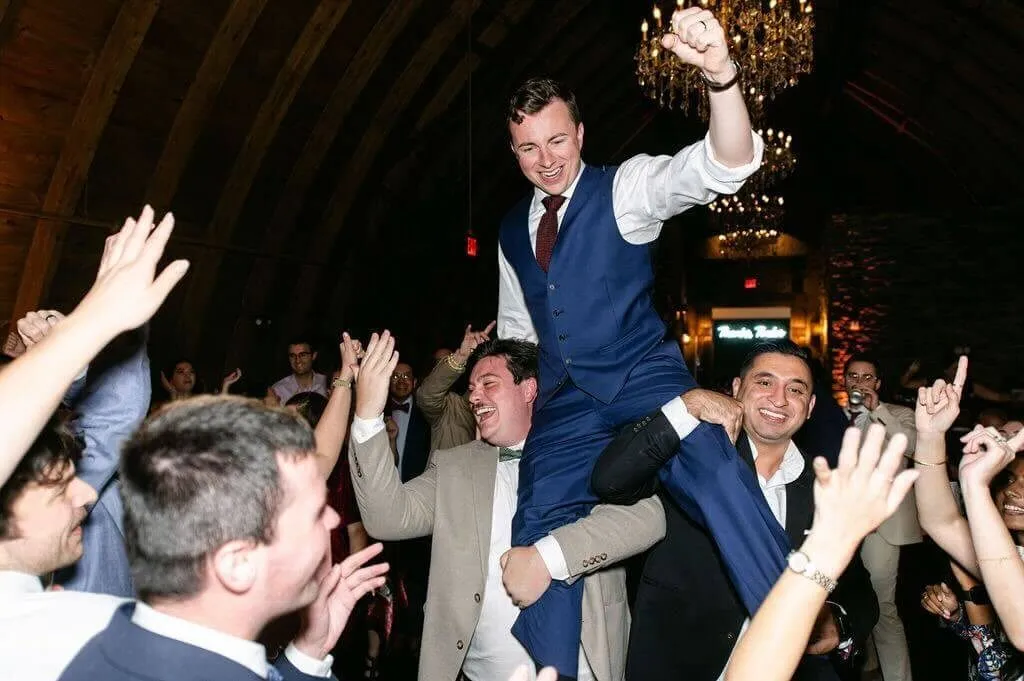
The grand entrance is the first time your DJ actually gets to perform for your guests as an MC, and it is also one of the most commonly mishandled parts of a reception. Done well, it takes five to eight minutes and launches the night with genuine energy. Done poorly, it turns into a fifteen minute roll call that guests tune out halfway through.
Decide on your entrance style first
There are broadly three approaches DMV couples use: a full, individually announced wedding party entrance where each pair is introduced by name with a short walk-in moment, a group entrance where the wedding party comes in together as a unit with one big announcement, and a couple-only entrance where you skip announcing the wedding party individually and go straight to introducing the two of you. All three work, and the right choice depends on your wedding party size and your own comfort with attention.
Keep individual introductions short if you choose that route
If you have eight or more people in your wedding party, individually announcing each pair with a distinct song moment can easily run past twelve minutes, which is longer than most guests want to stand and watch. If you want individual introductions, ask your DJ to keep each pair’s moment to about ten to fifteen seconds of music and clapping before moving to the next, rather than a full song per pair.
Give your DJ real information, not just names
A generic “please welcome the groomsmen and bridesmaids” loses energy fast if it is not clear the DJ actually knows who is walking in. Give your DJ a written list of names in exact order, correct pronunciations, and any specific nicknames guests will recognize, like “please welcome Ryan, better known to this crowd as Big Papi.” Small, specific details like this get real reactions from a crowd that includes friends who will recognize the reference.
Write this list out as an actual document, not a verbal mention during your planning call. We ask couples to submit it at least two weeks before the wedding, phonetically spelled where a name is easy to mispronounce, so there is time to confirm anything unclear rather than guessing from a text message the morning of the wedding.
Choose entrance music with intention
Wedding party entrances tend to work best with something upbeat and fun, often a song that reflects the wedding party’s personality rather than a formal or romantic tone, since the mood you want here is excitement, not solemnity. The couple’s own entrance right after is where you can shift tone, choosing something that reflects the two of you specifically, whether that is high energy, funny, or a callback to a meaningful song from your relationship.
If different pairs in your wedding party have genuinely different personalities, some DJs will cut between two or three different song snippets across the group rather than looping one track for everyone, so the entrance doesn’t feel monotonous by the sixth pair. This works well with larger wedding parties, but requires the DJ to have practiced the cut points in advance so transitions land cleanly instead of chopping mid-phrase.
Consider a choreographed or surprise entrance carefully
Some wedding parties plan a short dance routine or a surprise entrance move, and these can be genuinely fun if the group actually wants to do it and has practiced. But a half-hearted, unrehearsed attempt at choreography often reads as more awkward than charming. If your wedding party is not genuinely excited about performing something, a confident walk-in with good music does the job just as well without the risk.
If you do go the choreography route, tell your DJ the exact song and version you rehearsed to, including whether it’s a clean radio edit or the explicit album version, since a different edit can throw off timed movements by a beat or two. Also confirm with your photographer and videographer, since a choreographed entrance is exactly the kind of moment they’ll want to be positioned for in advance rather than reacting to in real time.
Plan the couple’s actual entrance moment
Some couples want to burst in and go straight into the room energetically. Others prefer a brief pause at the doorway for photos before continuing in. Tell your photographer and DJ which you want in advance so the pacing matches, and so your photographer is positioned correctly rather than guessing whether you will pause or keep moving.
Sequencing after the entrance
Many DMV receptions move directly from the entrance into either the first dance or a welcome toast, without a break in momentum. If you are doing your first dance immediately after entering, tell your DJ so they can transition smoothly rather than restarting energy from scratch with an announcement gap in between.
Some couples prefer the opposite approach: entering, catching their breath for a moment, and letting the wedding party settle at the head table before toasts begin. Neither approach is wrong, but your DJ needs to know which one you want so they can build the transition music and pacing around it rather than improvising in the moment.
Venue logistics affect entrance planning
A venue with a long walk from the doorway to the center of the room, like a large ballroom at Turf Valley or the Bethesda North Marriott, gives you more runway for a longer entrance walk with music building. A smaller or more intimate venue, like a rowhouse backyard in Old Town Alexandria or a small barn space, may call for a shorter, tighter entrance since the physical distance guests are covering is much less.
Tent receptions add another wrinkle: entrances often happen through a single tent flap or opening rather than a grand double door, which changes how much of a visual reveal you actually get. Walking the physical space with your DJ or planner ahead of time, even just from photos and a floor plan if an in-person walkthrough isn’t possible, helps avoid discovering these constraints for the first time on the wedding day.
What to avoid
Avoid overly long individual song selections per pair that force your DJ to awkwardly fade out mid-song to keep things moving. Avoid entrance lists with unclear names or pronunciations that force your DJ to guess in the moment. And avoid scheduling the entrance so tightly against other events, like immediately before a sit-down dinner service that is not actually ready, that guests are left standing around afterward with nothing happening.
Another common mistake is treating the entrance list as an afterthought handled by a rushed text the morning of the wedding. Names get misspelled, pairings get reordered without anyone flagging the change, and a nervous DJ ends up guessing. Building this list early and confirming it once more during your final planning call removes almost all of that risk.
A quick planning checklist
Decide on your entrance style and estimated total time. Write out the full order with correct names and any fun details for your DJ. Choose entrance music for the wedding party and separately for yourselves as a couple. Confirm what happens immediately after the entrance, whether that is a toast, first dance, or dinner service. Walk your DJ through the physical space if it has an unusual layout, so they know exactly when to time the announcement relative to your actual walk. And confirm with your photo and video team where they’ll be standing so nobody is scrambling for position once the doors open.
Handling last-minute wedding party changes
It happens more often than couples expect: a groomsman gets stuck at the airport, a bridesmaid is running behind after hair and makeup, or a pairing changes because someone’s plus-one situation shifted. Tell your DJ as early as possible if anything changes, even fifteen minutes before the entrance, rather than assuming they’ll figure it out. A quick heads-up lets your MC adjust the announcement smoothly instead of introducing someone who isn’t actually there.
Why this moment is worth the planning time
Your grand entrance is the first live, high-energy moment your guests experience together in the reception space, and it establishes the emotional tone for the rest of the night. A well-paced, well-announced entrance tells your guests, correctly, that the night ahead is going to be fun and well run.
Solender Events builds a custom entrance plan with every couple, including name pronunciation confirmation and music timing, well ahead of the wedding day.