Micro weddings and small receptions, generally anywhere from 20 to 75 guests, have become a common choice across the DMV, whether by preference or by budget. But a lot of couples planning a smaller wedding assume the entertainment plan should simply be a scaled-down version of a big wedding’s plan. In practice, a genuinely good small wedding entertainment plan is different in structure, not just smaller in scope.
Equipment needs actually change, not just shrink
A single, well-placed compact speaker system is often sufficient for a room of 40 guests, where a larger wedding might need a distributed sound system across multiple speakers to cover a bigger space evenly. Oversized sound equipment for a small, intimate room like a private dining space in Old Town Alexandria can actually feel overwhelming rather than impressive, with volume levels that make conversation difficult in a room where guests are physically close together.
Rethink the grand entrance
A full wedding party entrance with music and individual introductions can feel disproportionate for a wedding with a four-person wedding party and forty guests total, sometimes reading as more formal than the day actually feels. Many couples with smaller receptions opt for a simple, warm couple entrance without individual wedding party announcements, which fits the more intimate scale of the day.
Dancing still matters, just differently
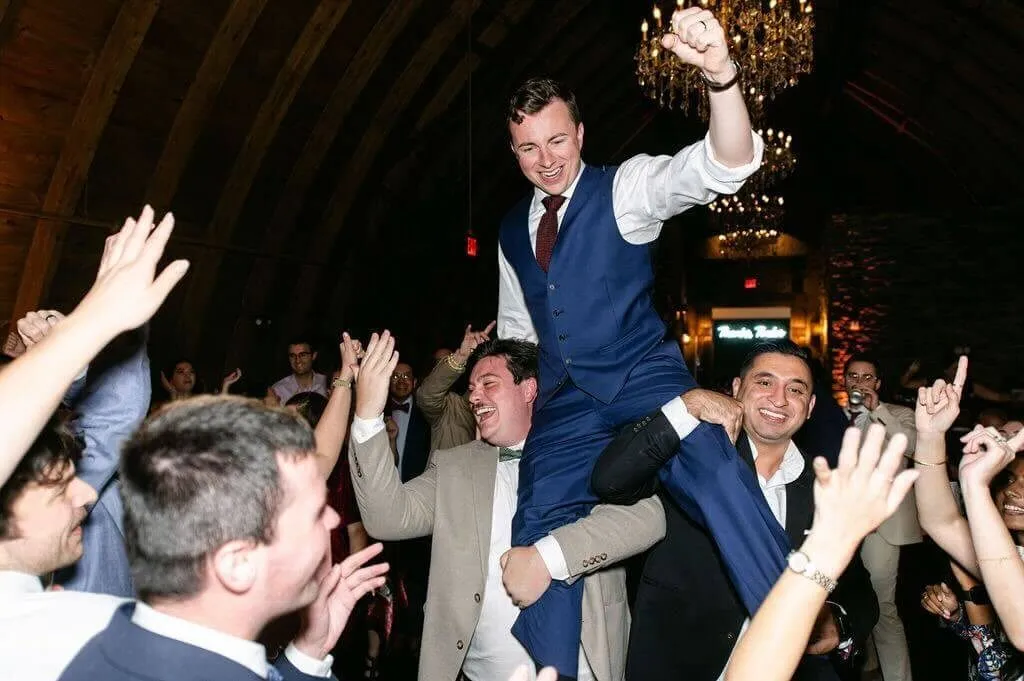
Do not assume a small guest list means no real dancing. What changes is the type of dance floor energy: with fewer people, individual guest preferences carry more weight, and a DJ needs to read a room of 40 people more personally than a room of 200, where broader crowd-pleasers naturally dominate. A good DJ for a micro wedding treats it more like a well-curated house party, leaning into specific songs this exact group of people will love rather than defaulting to universal hits.
MC style should shift too
A high-energy, loud MC style built for commanding attention across a large ballroom can feel like too much in an intimate space where guests are seated close together and can already hear each other easily. For smaller weddings, a more conversational, warmer MC approach usually fits better, with announcements that feel like a friend guiding the room rather than a formal emcee working a crowd.
Venues built for smaller groups
The DMV has a growing number of venues specifically suited to micro weddings: smaller estate properties, private dining rooms at restaurants in Frederick or Rockville, boutique inns on the Eastern Shore, and intimate garden spaces that would feel underwhelming for 200 guests but work beautifully for 30 to 50. If you are working with one of these smaller or unconventional spaces, ask your DJ about their experience with non-ballroom setups, since power access, layout, and acoustics can vary more than in a standard hotel ballroom.
Photo booths and add-ons at smaller scale
A photo booth can still be a great addition at a micro wedding, but consider a smaller footprint option or an open-air style setup rather than an enclosed booth, which can feel oversized relative to the room. Similarly, lighting for a small space often needs far less than a full uplighting package, sometimes just a few accent points or a simple string light installation rather than a dozen fixtures around a room.
Budget realities for smaller weddings
Fewer guests does not always mean a proportionally lower entertainment cost, since baseline costs like a DJ’s time, travel, and core equipment do not scale down linearly with headcount. However, add-ons like lighting packages, additional speakers for cocktail hour or ceremony, and photo booth upgrades often do scale down meaningfully, since a smaller space simply requires less equipment and setup time.
Timeline considerations for a shorter or smaller event
Many micro weddings run a shorter overall reception, sometimes three hours instead of five, which changes how much of each traditional element fits. Prioritize what matters most to you, whether that is more open dancing time, a longer toast section, or simply more unstructured time for guests to talk, and communicate that priority clearly to your DJ so they can build the shorter timeline around it rather than trying to cram in every traditional element in a compressed window.
Ceremony and cocktail hour sound at a small venue
Even a tiny ceremony deserves clean, reliable sound, and this is a spot where couples sometimes cut a corner they shouldn’t. A lapel or handheld microphone for the officiant matters just as much at 30 guests as at 200, since outdoor settings, wind, and ambient noise from a nearby street or neighboring event do not scale down with your guest count. If your ceremony and reception are in the same small space, ask your DJ how they plan to transition sound coverage between the two without an awkward gap while equipment is repositioned.
What a Micro Wedding Timeline Actually Looks Like
A typical three-hour micro wedding reception might run cocktail-style mingling for the first thirty to forty-five minutes, a single seated dinner service without formal course-by-course choreography, brief toasts, a first dance and parent dances condensed into one shorter block, and then open dancing for the remainder. Compressing the formalities without cutting them entirely is usually the right instinct: couples who try to include every single tradition from a full-scale wedding in a three-hour window often find the night feels rushed rather than relaxed, which defeats the purpose of choosing something smaller and more intimate in the first place.
A note on hiring decisions for micro weddings
Some couples assume a smaller wedding means they can hire a less experienced or less established DJ, since the room is easier to manage. In some cases that is true, but a smaller, more intimate crowd actually leaves less room for error: everyone is close enough to notice an awkward transition, a mistimed announcement, or a mismatched song choice. Experience still matters, even at a smaller scale.
The upside of going small
A well-run micro wedding entertainment plan often produces a warmer, more personal atmosphere than a large wedding can achieve, precisely because the DJ can tailor almost everything to the specific group in the room rather than playing to a broad crowd. Couples who lean into that difference, rather than trying to replicate a big wedding in miniature, tend to end up with a reception that actually feels distinct and memorable.
If you are planning a micro wedding or small reception anywhere in Maryland, DC or Virginia, Solender Events scales our approach, equipment, and MC style specifically for smaller guest counts rather than offering a one-size-down package.